
"A Cinematic Masterpiece: Francis Ford Coppola’s Apocalypse Now" by Julie Calvert

If you have ever had the displeasure of talking to me in recent times, then you will know I will mention Francis Ford Coppola’s 1979 ‘war epic’ masterpiece, Apocalypse Now, at least once, or twice… or perhaps even a daring ‘thrice.’ This film, at its core, is a story—a tale to be told; above that, in its stratosphere, satire. The film follows Cap, Benjamin L. Willard (Martin Sheen), a Green Beret tasked with the mission of taking down Colonel Walter E. Kurtz. The world of Apocalypse Now—Coppola’s ‘Nam—is not unlike America’s own lemming-esque time in ‘Nam. “We had access to too much money, too much equipment, and little by little we went insane,” Coppola recalls about the film's production, which mirrors America’s intervention in Vietnam. “My film is not about Vietnam. It is Vietnam. It's what it was really like. It was crazy. And the way we made it was very much like the way the Americans were in Vietnam. We were in the jungle. There were too many of us.”
The specific genre of satire that Apocalypse Now utilizes is Juvenalian satire—a dark and more serious type of satire that often explores the flaws and corruption of political or cultural systems. In the film, this is seen predominantly in the portrayal of the American military, particularly with Lieutenant Colonel William "Bill" Kilgore, who airraids without true tactical reason, but rather so he can surf. “Charlie don’t surf!” Kilgore declares to Cap. Benjamin L. Willard, who is simply trying to get access to the Nung River as to find Colonel Walter E. Kurtz, a rogue officer who believes he has the know-how to finish the war.
But the story itself is not critical of war as a whole, but specifically America’s backwardness in Vietnam. Willard does not criticize Kilgore; he doesn’t even criticize Kurtz. In fact, in some theatrical releases of the film, it is heavily implied that Willard takes Kurtz's place. None of the men of this movie oppose war–Kilgore is a warmonger, but he retains some ‘mortal terror’–he gives water to a Vietcong because, “[a]ny man brave enough to fight with his guts strapped in can drink from my canteen any day.” A true gung-ho American. Kurtz, on the other hand, believes that in order to win a war, one must be moral, but that morality must be wholeheartedly separate from the soldier. Willard stands between these two dichotomies. “There are two of you, don't you see? One that kills...and one that loves,” Roxxane tells Willard.
Kurtz does not go AWOL out of hatred for the American military; he goes AWOL because he believes he could end the war if he could act outside the American guise of morality. Willard, who initially wishes for nothing more than to return to the jungle, after seeing the mismanagement, senseless and avoidable violence, finds himself aligning with Kurtz—the war could be over if only the Americans could truly act without moral terror. Yet Willard finds his methods–or lack thereof, as he tells Kurtz–unsound; but he understands the ‘why?’ behind Kurtz.
The film's satire lies in the acknowledgment of America not having a plan for Vietnam. Willard, Kurtz, and Kilgore all symbolize aspects of the dysfunction of the military, and where many men found themselves in the jungle.
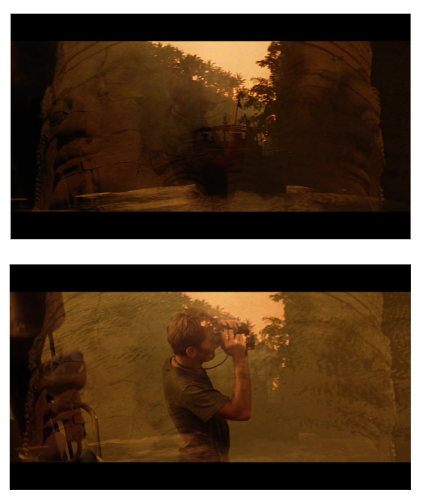
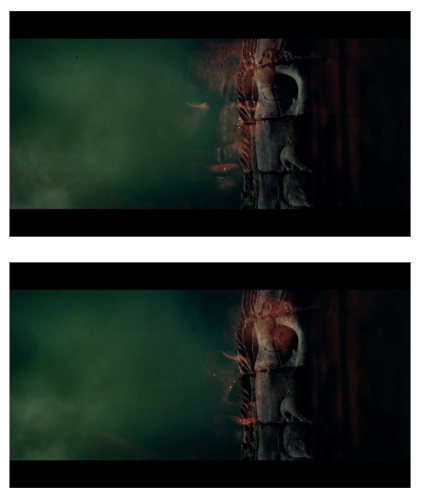
The editors of Apocalypse Now, Richard Marks, Walter Murch, Gerald B. Greenberg, and Lisa Fruchtman, do a particularly wonderful job at portraying the dichotomy of Willard.


Comments